Marine Purifier Sludge Management: Optimising Fuel Oil Treatment and MARPOL Compliance
Blog | July 29th, 2026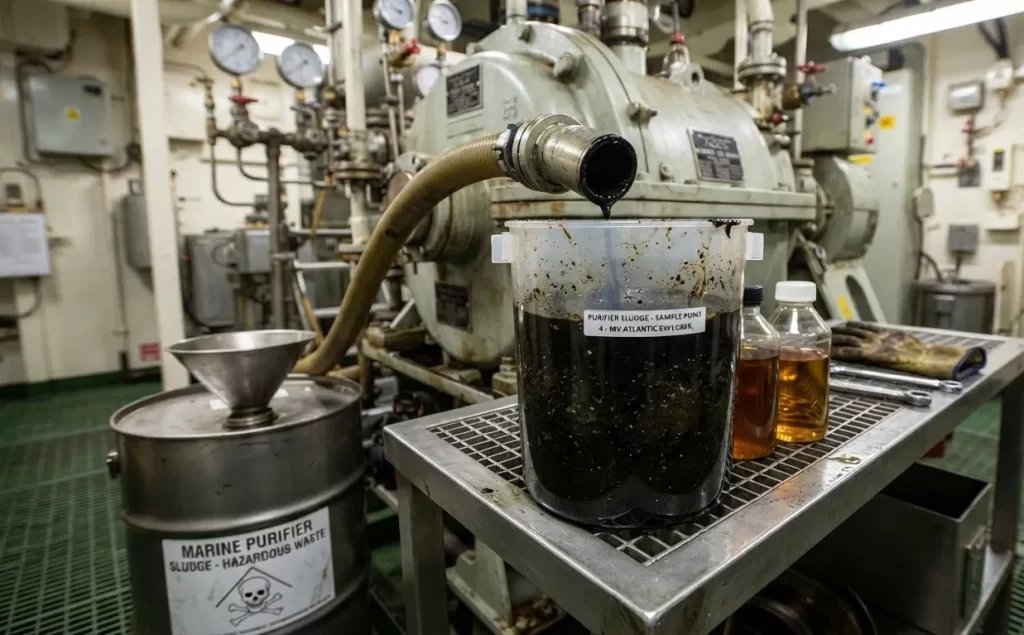
Marine purifier sludge management supports fuel treatment and machinery reliability when separator operation, maintenance and records are controlled.
The purifier is one part of the vessel’s fuel and waste-management system. Effective operation requires suitable settings, maintained equipment and procedures aligned with the vessel’s machinery and statutory obligations.
What Is Marine Purifier Sludge Management?
Marine purifier sludge management covers the controlled handling of water and solids separated from fuel or lubricating oil. It includes separator operation, sludge transfer, tank management, equipment maintenance and the records required by the vessel’s procedures and applicable regulations.
Wildon Engineering supplies and supports Mitsubishi Kakoki Kaisha equipment, including purifier separators and related parts. Its role should not be overstated as guaranteeing a vessel’s compliance or providing every sludge-disposal service.
How Does Purifier Performance Affect Fuel Treatment?
A centrifugal separator removes contaminants by exploiting density differences under high rotational force. Performance depends on equipment selection, fuel characteristics, temperature, throughput, operating settings and mechanical condition.
Operators should monitor:
- fuel specification and onboard compatibility information;
- settling and service tank conditions;
- purifier temperature and flow rate;
- abnormal vibration, alarms, leakage or discharge behaviour;
- sludge tank levels and transfer arrangements; and
- maintenance intervals, service records and spare-parts availability.
VLSFO behaviour varies between fuel batches. The AMSA very low sulphur fuel oil study provides Australian operational context, but it does not prove that every low-sulphur fuel produces more sludge.
What Causes Excessive Sludge?
Higher-than-expected sludge volume can have several causes: unstable or contaminated fuel, water ingress, unsuitable temperature, excessive throughput, incorrect settings, ineffective settling or a separator requiring maintenance.
Do not assume that increasing discharge frequency solves the underlying problem. Operators should review the fuel-handling chain and compare conditions with the manufacturer’s instructions. Wildon’s article on purifiers and clarifiers explains the different separation functions.
Where Mitsubishi equipment is installed, model and serial information are essential when requesting parts or technical support. Photographs of the nameplate, alarm details and maintenance history can reduce identification delays.
How Does This Relate to Compliance?
MARPOL Annex I establishes international controls for oil pollution from ships. The exact onboard procedures, equipment, recordkeeping and disposal obligations depend on the vessel and operation. A functioning purifier supports fuel treatment, but it is not by itself proof of compliance.
The vessel’s approved procedures and Oil Record Book requirements must be followed. Disposal and transfer records should reflect actual operations; invented “capacity alignment” rules should not be added to marketing content without a regulatory source.
Improve the Technical Enquiry
Reliable support begins with accurate equipment and operating information—not broad promises of fuel savings or legal compliance.
After maintenance, operating results should be checked against the maker’s instructions and the vessel’s normal baseline. Record relevant temperatures, throughput, alarms and discharge behaviour rather than relying only on a visual impression of cleaner fuel. Trend information can help distinguish a recurring fuel-handling problem from a mechanical fault and gives shore support better evidence for its next recommendation.
Contact Wildon Engineering through its technical support page with the Mitsubishi model, serial number, operating symptoms, fuel details and service history. This gives the team a practical basis for purifier assessment, parts identification or maintenance support.
Optimized by NetwizardSEO.com.au
Recent Posts
- Marine Gearbox Oil Analysis to Detect Wear Before Propulsion Failure
- MESON Fuel Valves for Safe Marine Fuel Isolation During Maintenance
- KEMEL Stern Tube Seals for Dry Dock Repair and Replacement Planning
- Yanmar Power Solutions for Commercial Vessels Requiring Reliable Auxiliary Power
- Mareflex SOLAS Tape Order Enquiries: Width, Application and Quantity
- Marine Purifier Sludge Management: Optimising Fuel Oil Treatment and MARPOL Compliance
- Compressed Air Contamination on Ships: Causes, Risks, and Prevention Strategies
- Marine Air Compressor Sizing: Matching Output to Shipboard Demand
- Specialist Japan Marine Gearbox Repair: Precision Engineering & Overhauls
- Marine Turbocharger Washing: When Maintenance Ends and Part Replacement Begins